
Veterinary Services
Pet Diagnostic Imaging at Best Friends Veterinary Center in Grafton, WI
Best Friends Veterinary Center in Grafton, WI, offers precise digital X-rays, echocardiograms, and ultrasounds for accurate diagnosis and treatment.

Pet Diagnostic Imaging in Grafton, WI
Reasons for Diagnostic Imaging
Diagnostic imaging is essential for several reasons, including:
- Assessing Facial Swelling and Dental Issues: Imaging helps evaluate the extent of facial swelling or dental problems, providing a clear view of the underlying causes.
- Detecting Bladder Stones: Images can reveal stones and tumors within the bladder.
- Determining Bone Fractures: Identifying the location and severity of broken bones or fractures is critical for appropriate treatment.
- Evaluating Pregnancy: Imaging can monitor the health and development of an unborn litter.
- Identifying Heart Disease: Diagnostic imaging aids in detecting conditions related to the heart.
- Diagnose Respiratory Disease: Pneumonia, bronchitis, asthma and other respiratory conditions.
- Locating Foreign Bodies: If a pet has swallowed a foreign object, imaging can pinpoint its location for removal or indicate if surgery is necessary.
Types of Diagnostic Imaging
We utilize several types of diagnostic imaging to ensure comprehensive assessment:
- Digital X-Rays: Digital X-rays are often the first imaging test performed. They produce high-contrast images with reduced radiation exposure compared to traditional X-rays. This method allows for fewer images, minimizing your pet’s discomfort while maintaining diagnostic accuracy.
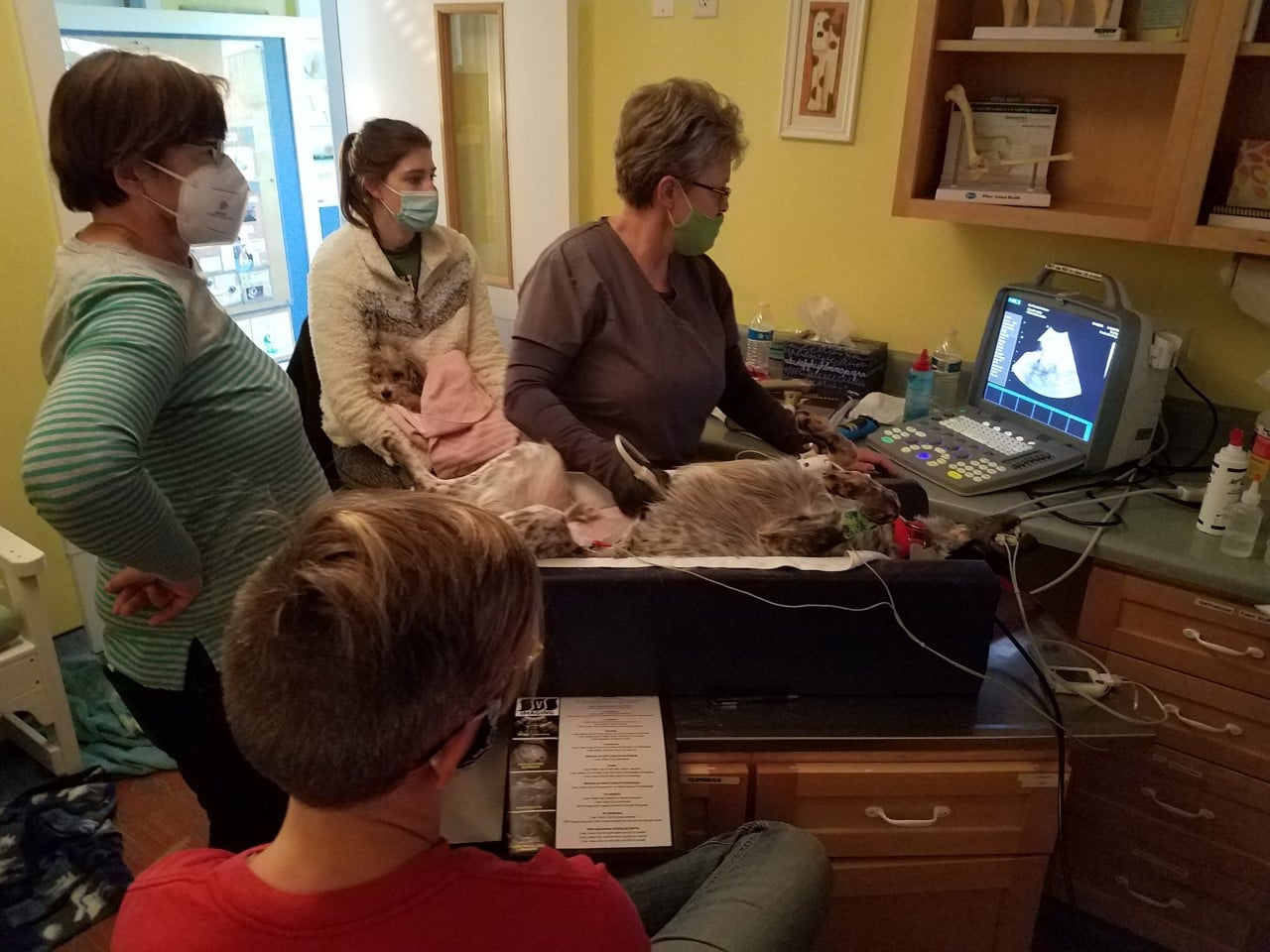
- Ultrasound: Ultrasound imaging uses sound waves to create 3D images, making it ideal for examining soft tissues inside the abdomen. It is a gentle method of imaging.
The Diagnostic Imaging Process
The diagnostic imaging process depends on the imaging type used and the size of your pet. Smaller pets may be positioned in various ways to capture the necessary images. Our team takes extra care to ensure the comfort and cooperation of anxious or uncooperative pets. In most cases, mild sedation or anesthesia will be used to keep your pet still and relaxed during the procedure.
Our goal is to make the imaging process as stress-free as possible for your pet while obtaining the most accurate results. After imaging, our veterinarians will review the results and discuss the findings with you, providing a clear understanding of the diagnosis and potential treatment options.